In short
A natural-looking hairline depends less on how low it sits and more on how it is designed: soft irregularity at the front, the right hair angle and direction, gradual density, and a shape that suits your face and age. Good design is planned with your long-term hair loss in mind, not just how things look today.
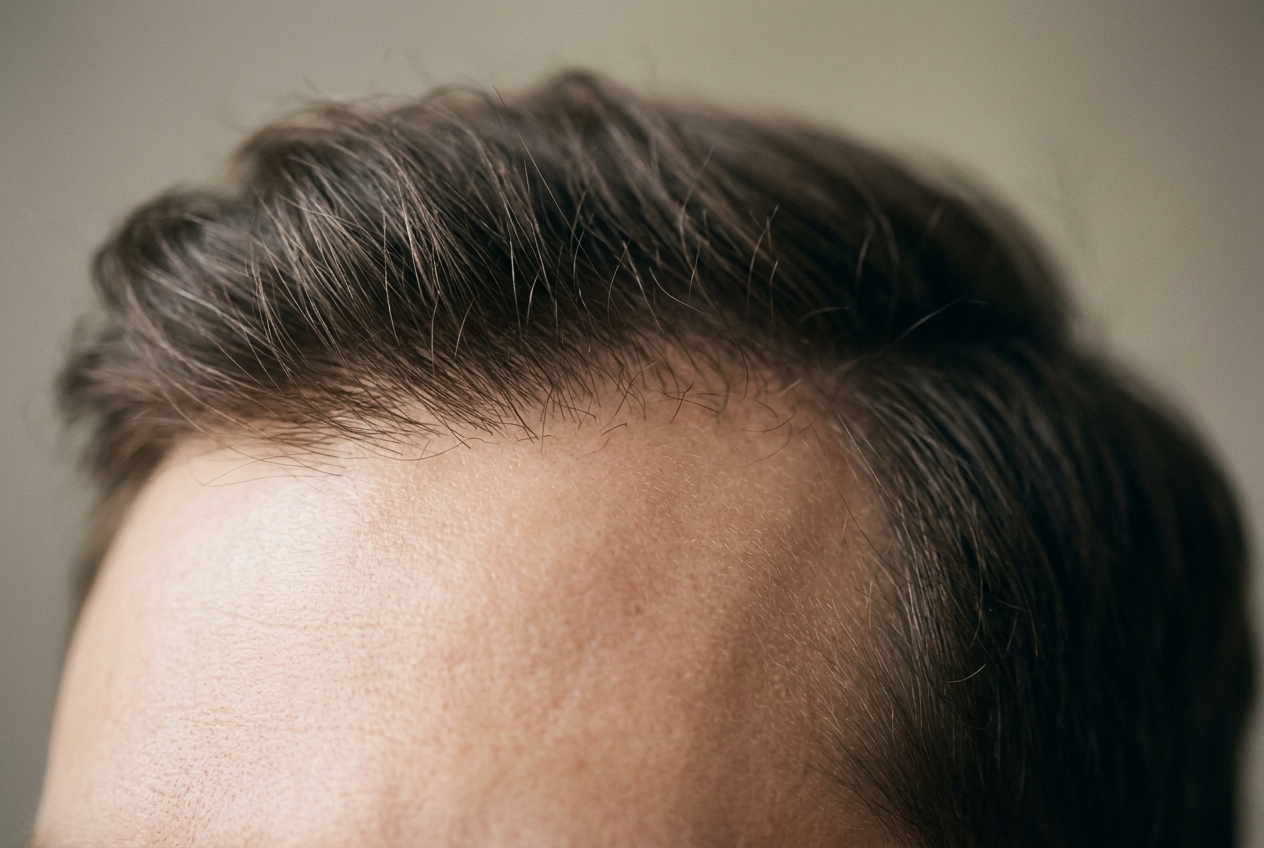
When people say a hair transplant looks natural, they are usually responding to the hairline. It is the most visible part of the result and the hardest to get right. A believable hairline is designed, not just filled in, and the principles behind good design are worth understanding before any procedure.
It is not about being low
Many people assume a natural result means the lowest possible hairline. In practice, a very low or perfectly straight line often looks artificial and ignores the reality that hair loss can continue. A hairline that suits your face shape and age usually looks more convincing, both now and years later.
The details that create realism
Natural hairlines have subtle irregularity at the front rather than a sharp edge. Single hairs are typically placed at the very front, with density building gradually behind them. The angle and direction of each hair should follow how hair naturally grows in that area. These small choices, repeated across thousands of grafts, are what make a result read as real.
Planning for the long term
Good hairline design considers your likely future hair loss and your limited donor supply. A responsible provider will discuss a shape that can still look right if your pattern advances, rather than one that only works today. This is a conversation to have openly during your consultation.
| Design element | Why it matters |
|---|---|
| Irregularity | A slightly uneven, soft front edge looks more natural than a straight line |
| Angle and direction | Hairs should follow the natural growth direction of the area |
| Density gradient | Lighter at the very front, building density behind, mimics nature |
| Age-appropriate shape | A hairline that suits your age tends to age well over time |
Common questions
Should I ask for the lowest possible hairline?
Not necessarily. A very low or straight hairline can look unnatural and may not account for future hair loss. A hairline suited to your face and age usually looks more believable now and later.
Why do some transplants look obvious?
Common causes include a hairline that is too straight, wrong hair angles, or density placed without a natural gradient. Careful design and planning reduce this risk.
Who decides the hairline design?
The provider designs it with you during consultation, balancing your goals with what is realistic for your donor supply and long-term pattern.
Sources
- Hair Transplant Practice Guidelines · DOI: 10.4103/JCAS.JCAS_104_20 · PMID: 34908769 · PMCID: PMC8611706
Ready to take the next step?
Share a few details and HairPathway will review your enquiry and help you identify a suitable medical provider.